ECOteekki
A content and visual toolkit for a Finnish family-owned wellbeing retailer.
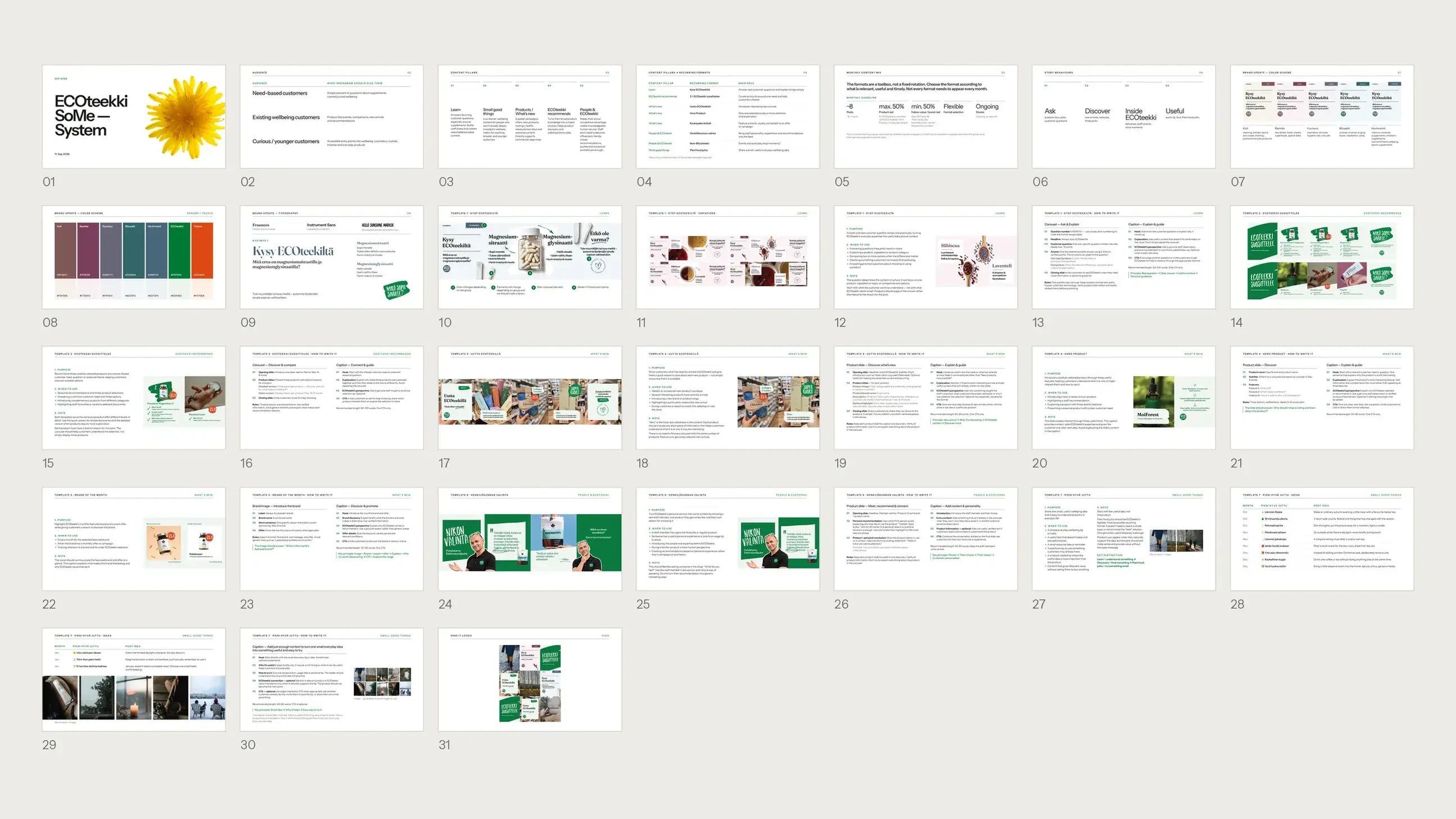
The project connects content planning, writing guidance and visual assets in one system—from choosing a topic to preparing a finished post.
Timeline: Two-week core project, followed by ongoing refinement and client support.
How could I help with Finnish social media while still learning Finnish?
As a Romanian designer new to Finland, I brought over 10 years of design experience and a language barrier to work around.
ECOteekki’s 40th anniversary offered a chance to bring its expertise and personal service into a product-heavy Instagram feed.
The goal was useful content for customers and a workflow staff could manage within their available 1–3 hours a week.
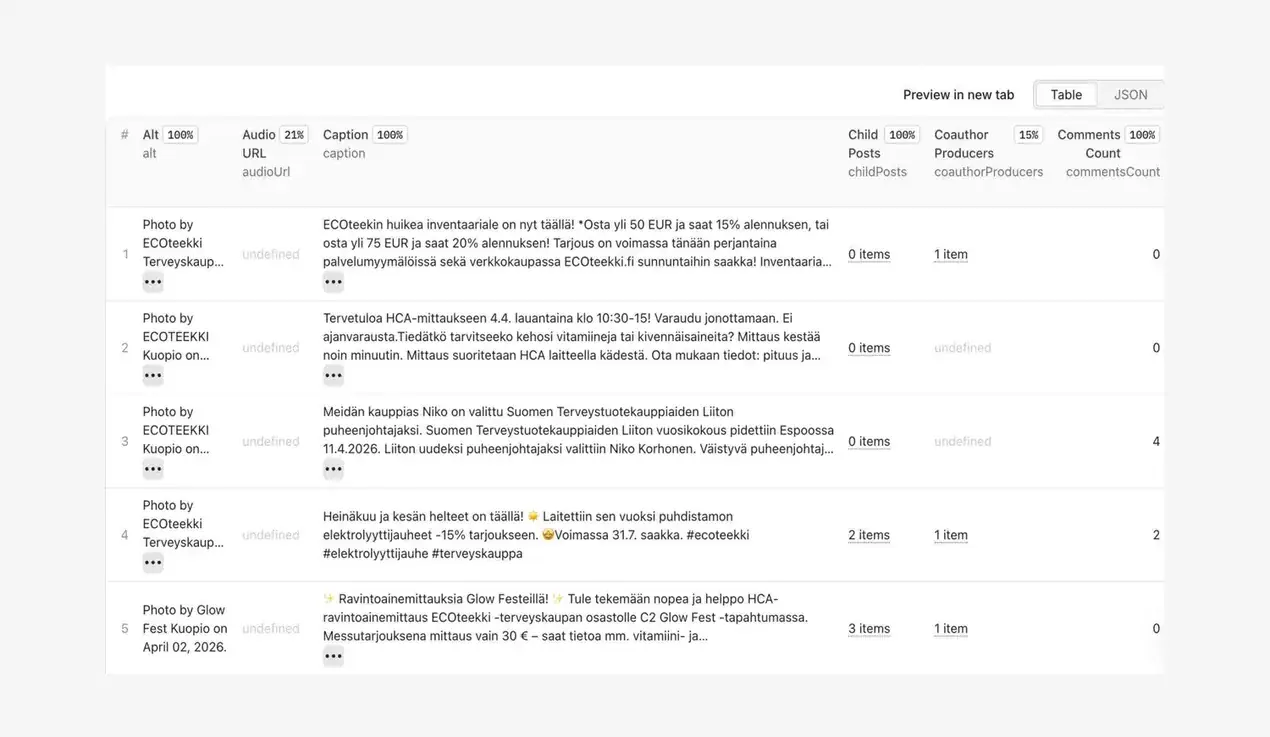
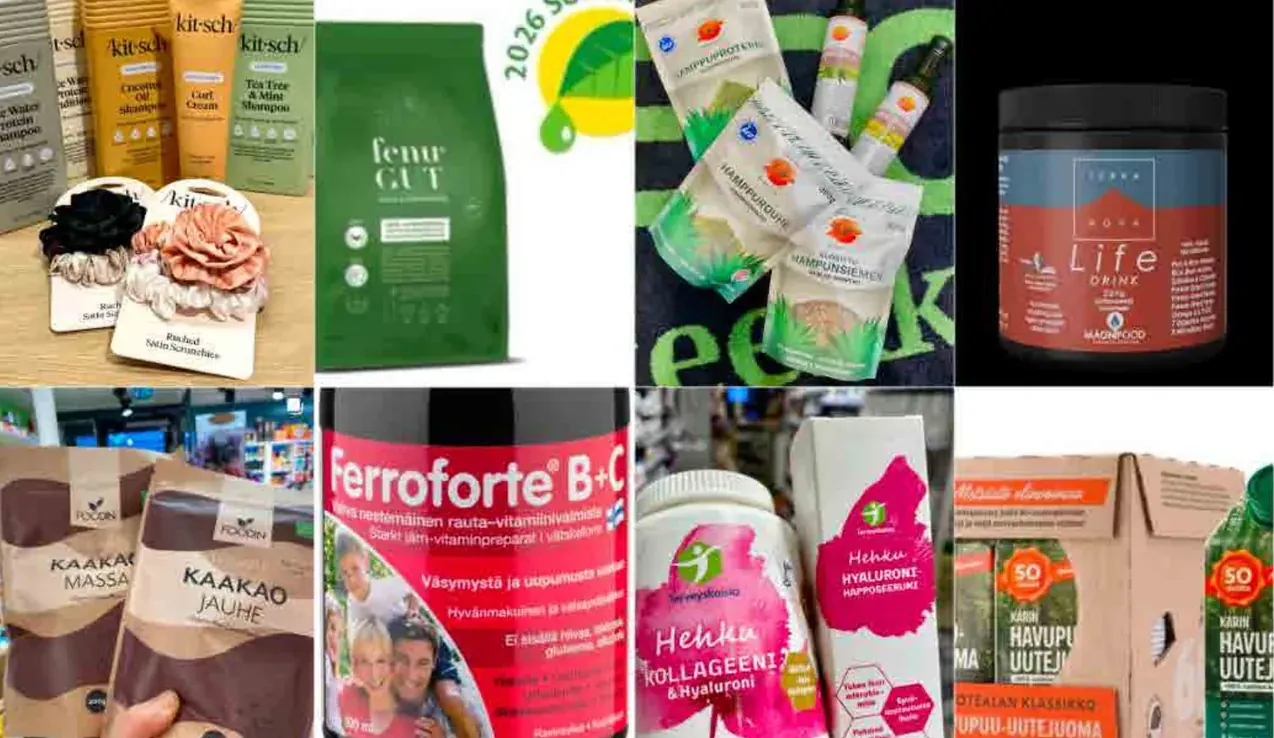
I used Apify and ChatGPT to analyse existing social media content and work across Finnish and English.
Better content needed a workable production process.
My initial hypothesis was that an updated brand kit and Canva templates, supported by a custom AI writing assistant, could help staff create consistent content independently.
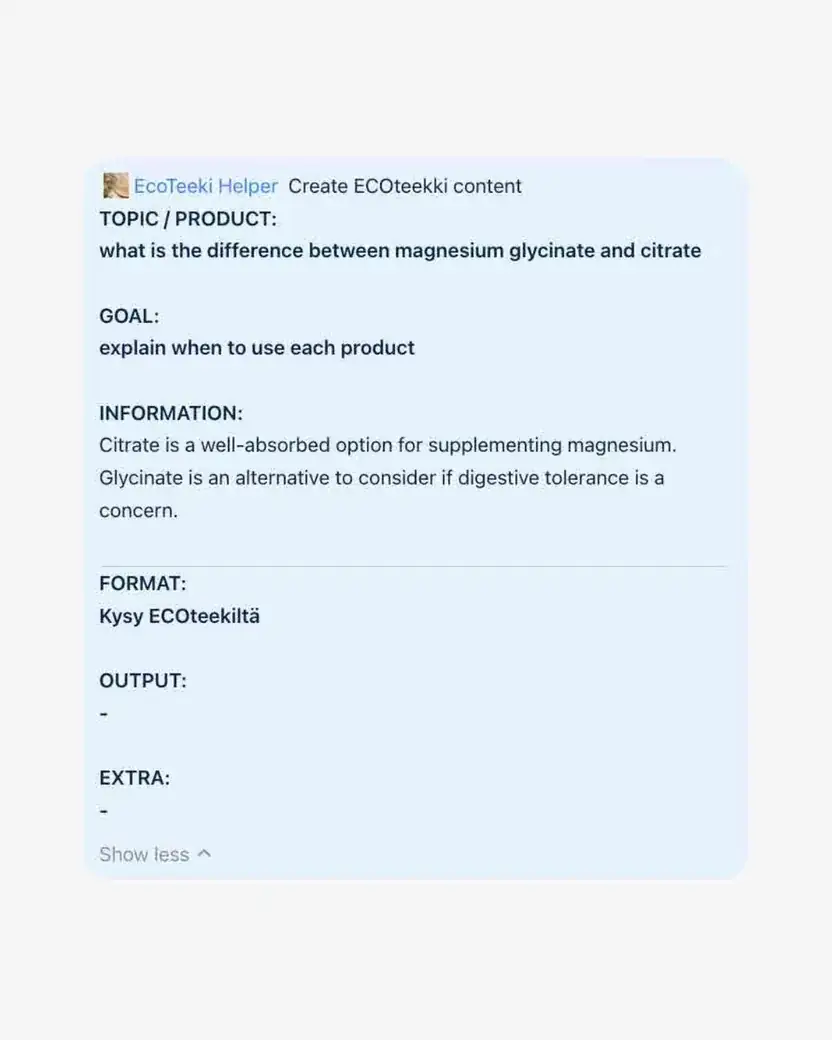
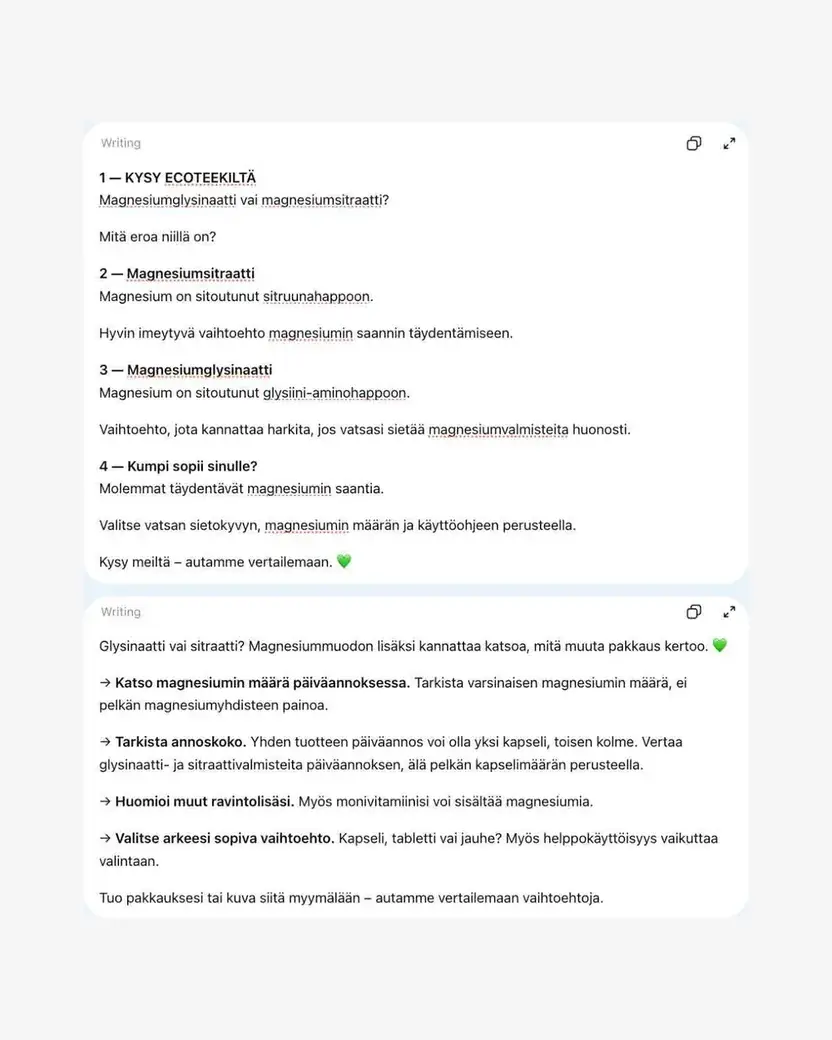

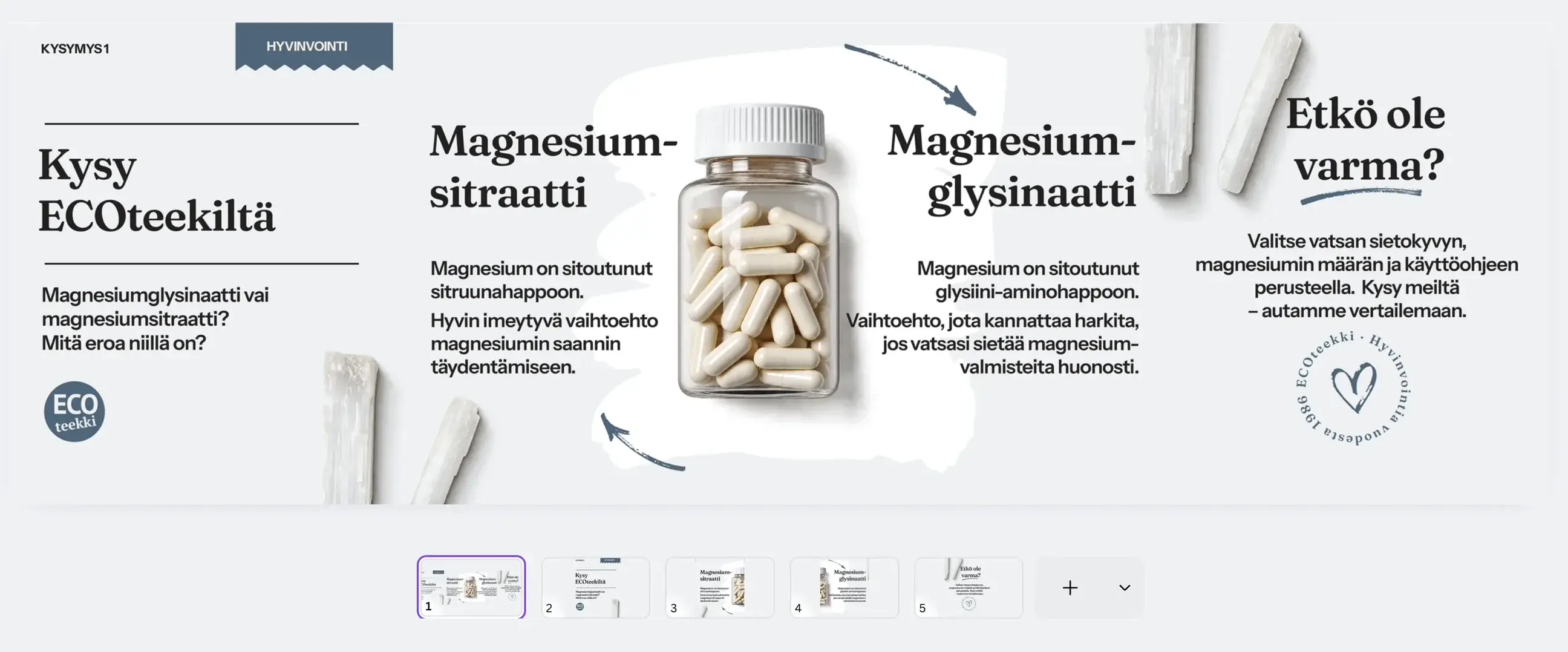
Defining what to say
Working directly with ECOteekki, I developed a content direction built around useful explanations, curated recommendations and staff expertise.
I organised this into recurring formats and writing guidelines, creating a knowledge base that guides the AI writing assistant to produce copy structured for the Canva templates.
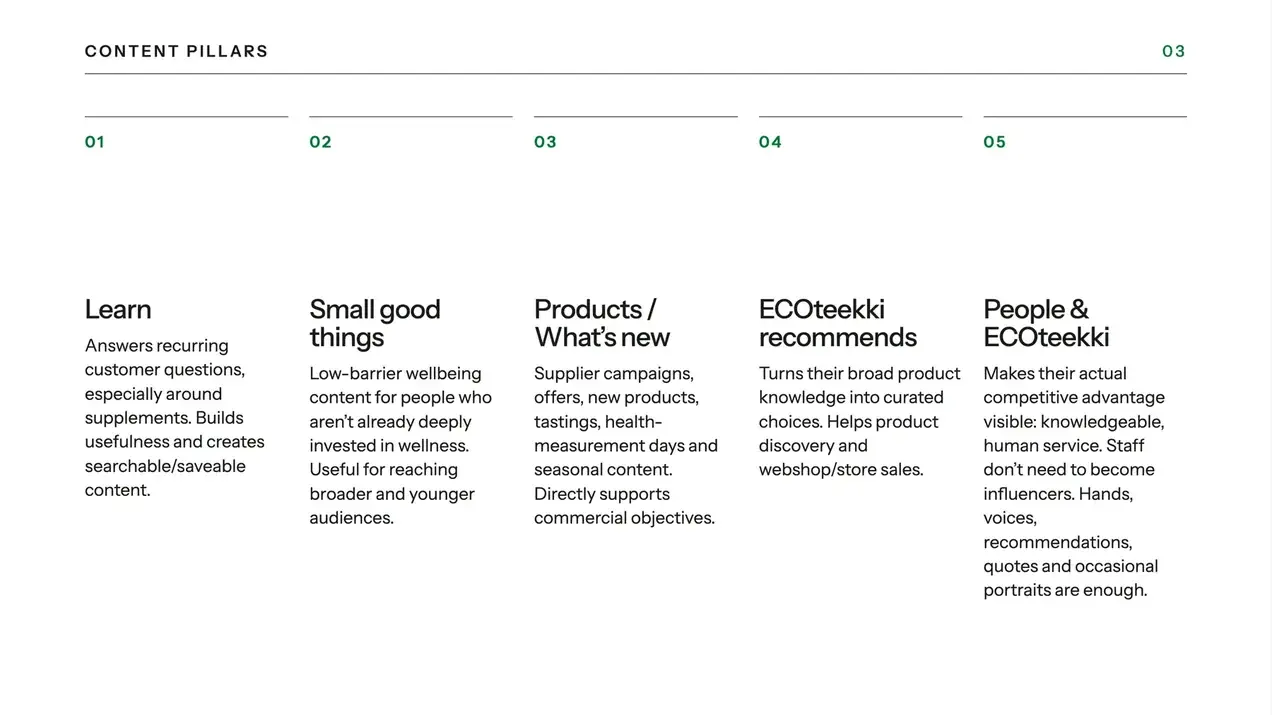
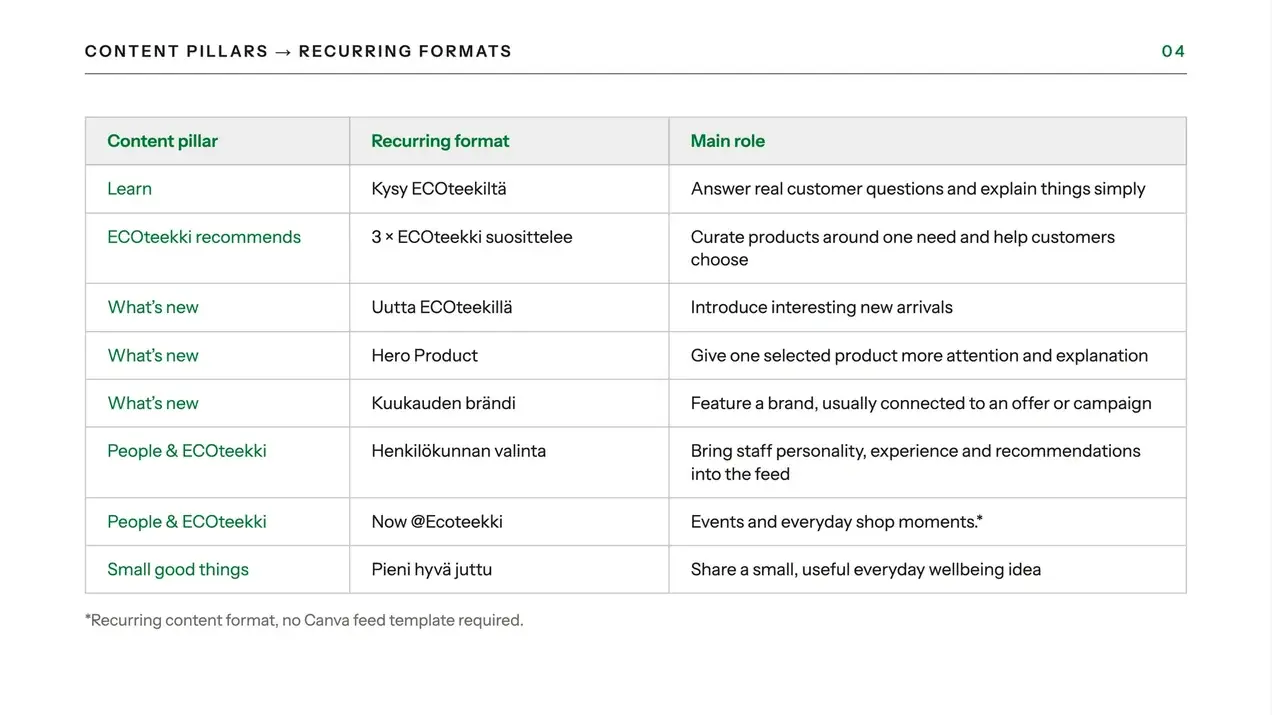
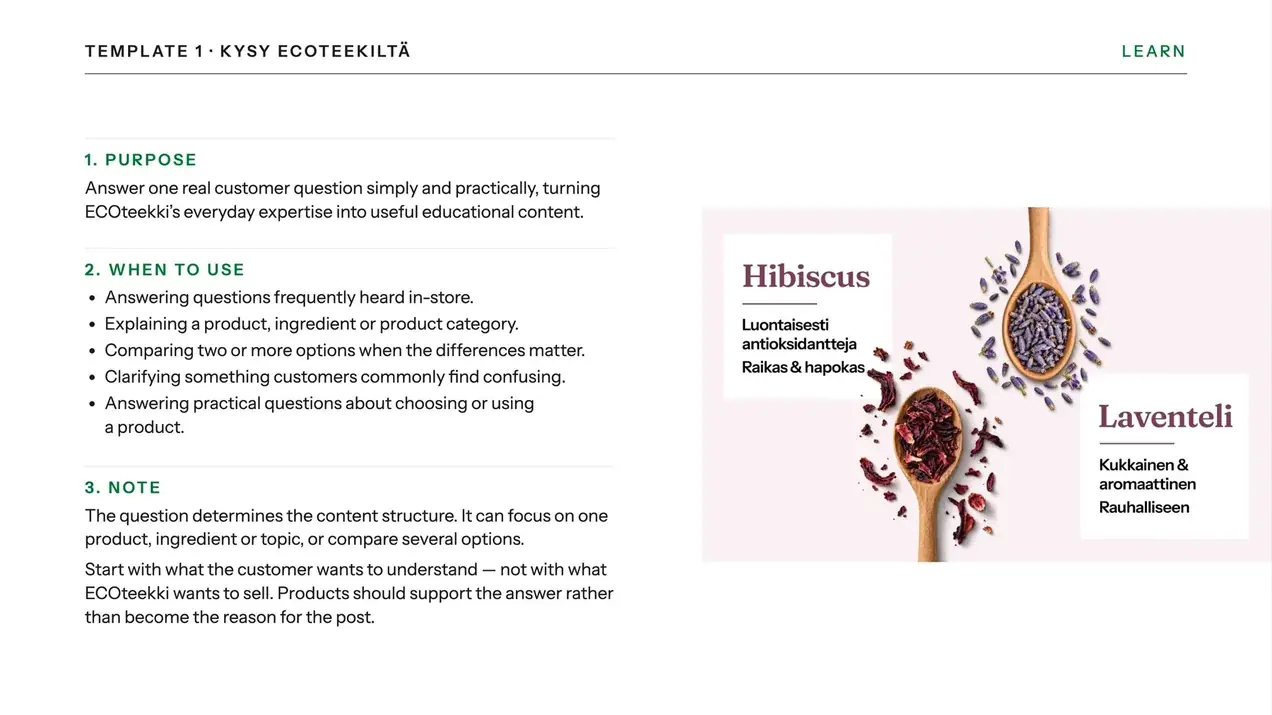
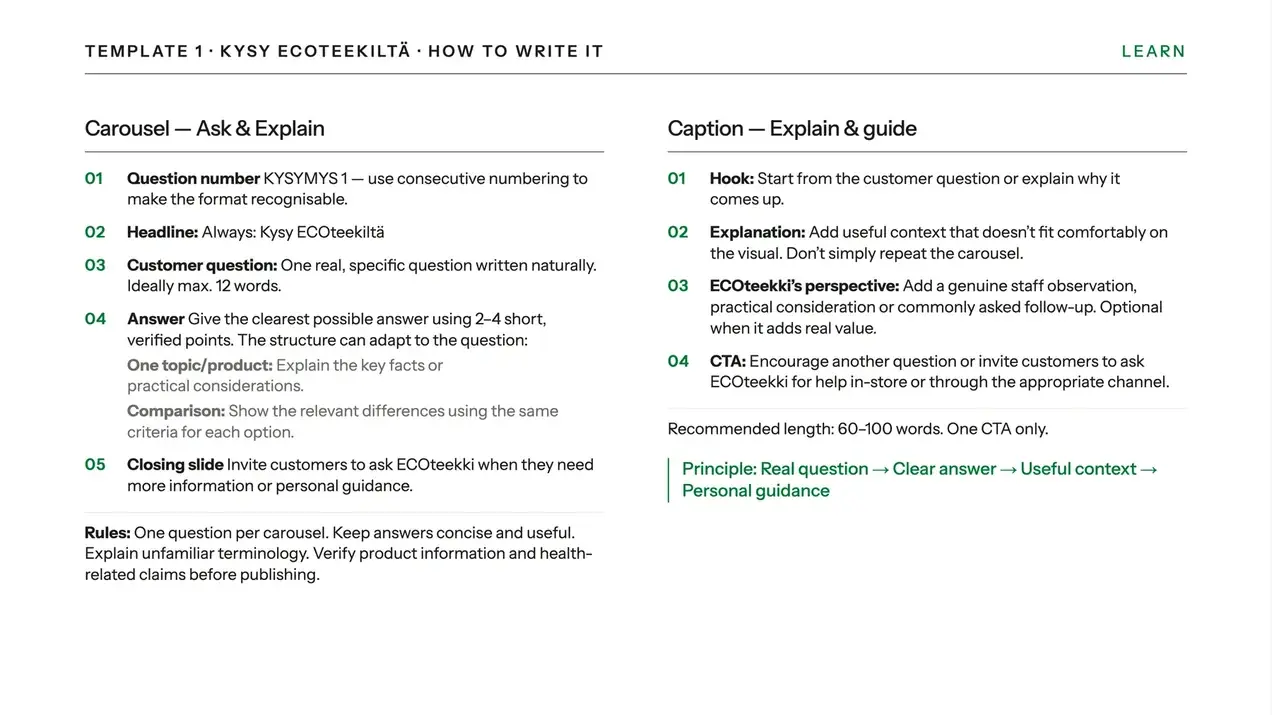
Content pillars, recurring formats and writing guidelines from the ECOteekki knowledge base.
Giving it a recognisable visual language
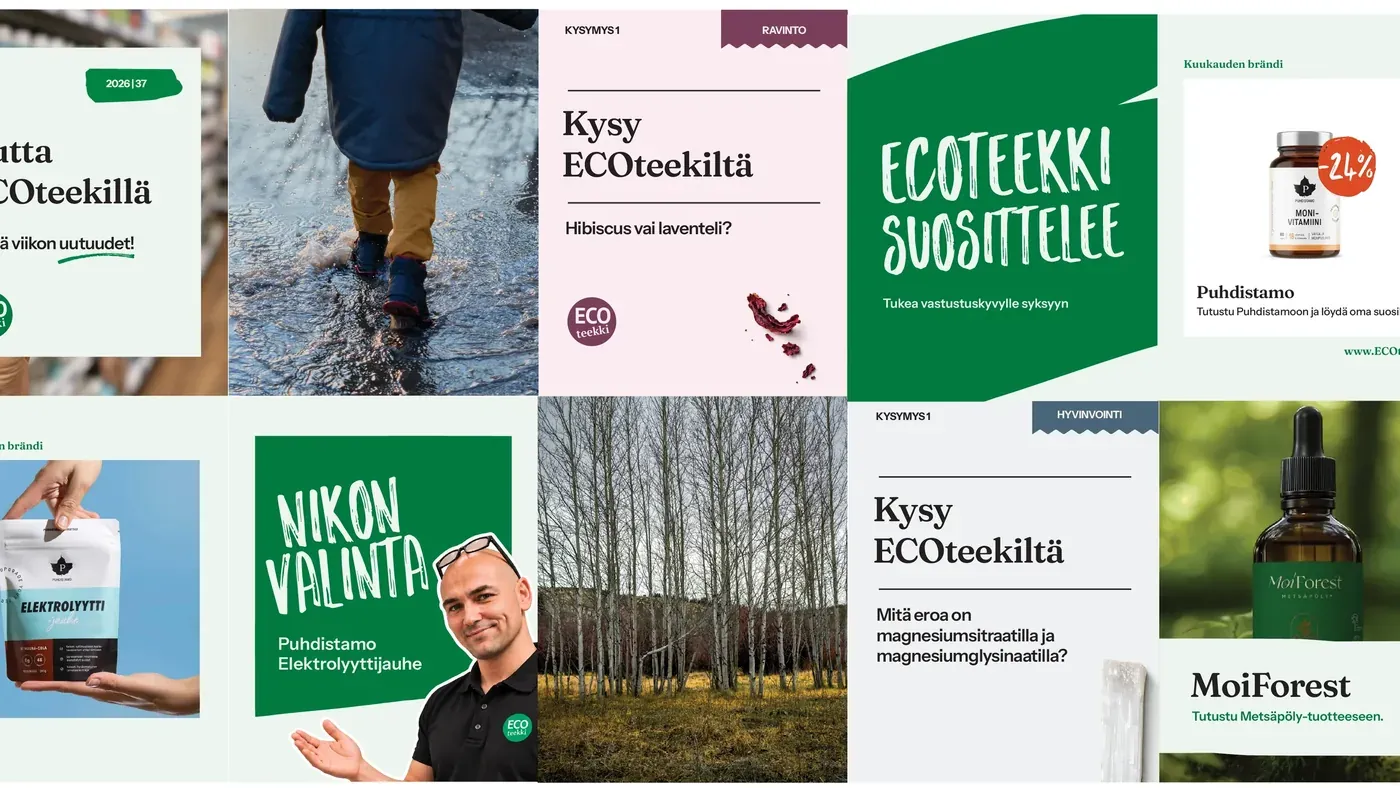
I gave these formats a shared visual language through typography, category colours, icons, imagery and photography guidelines.
Six Canva templates and a growing library of brand elements give staff reusable starting points. Image tools help maintain a coherent visual style as new content is created.
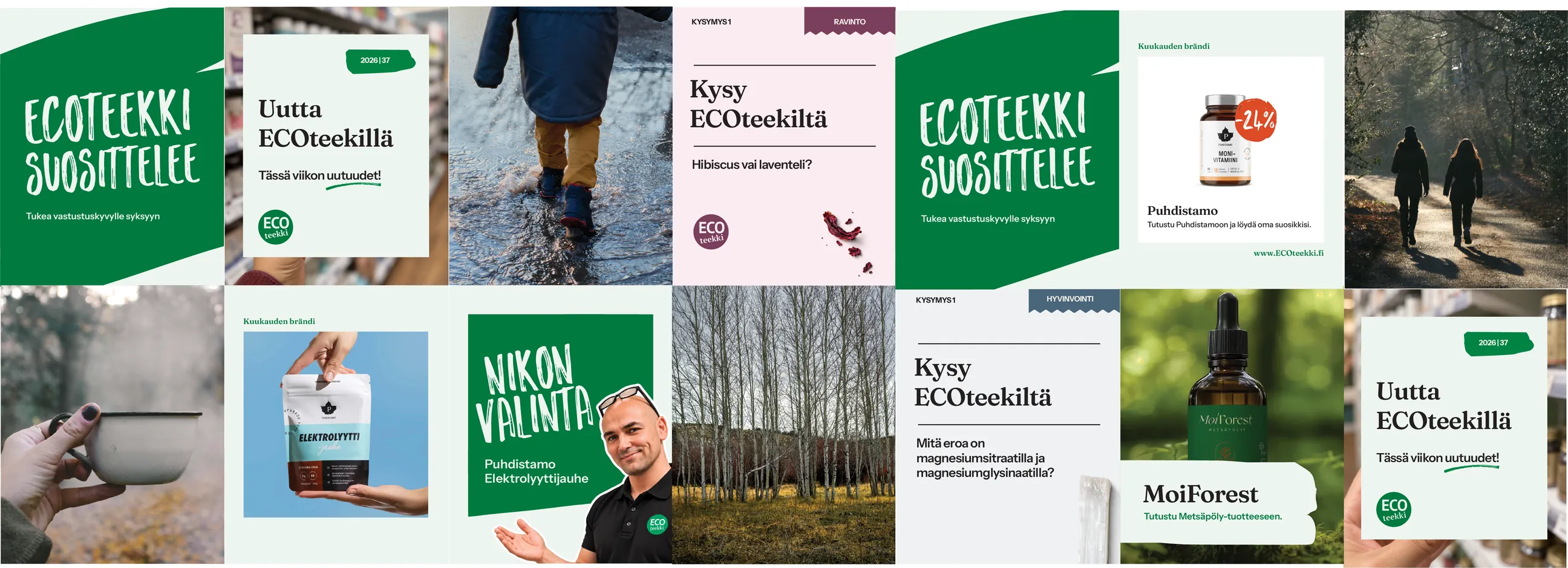
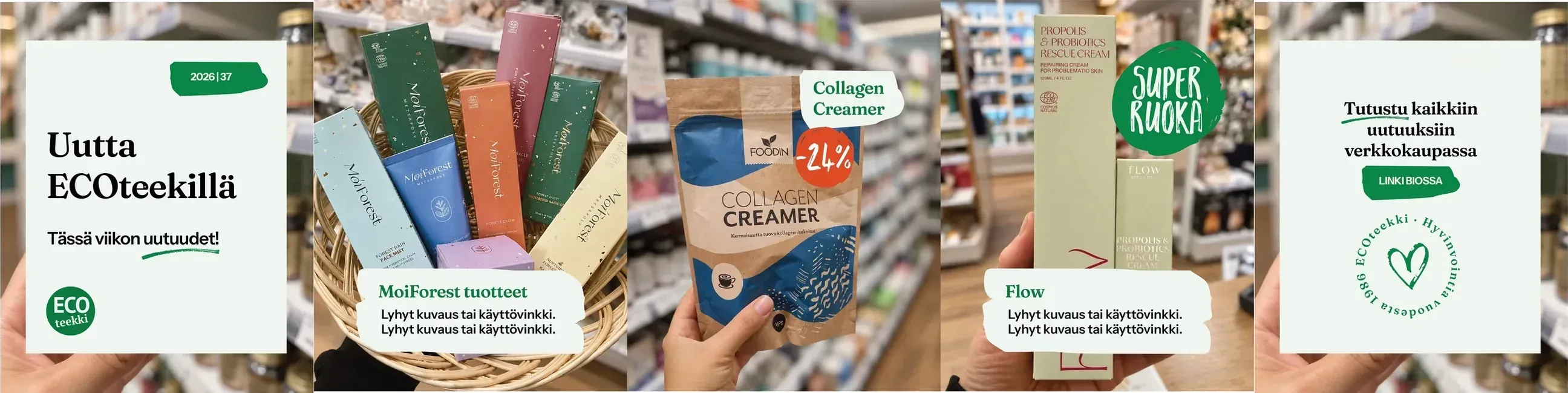
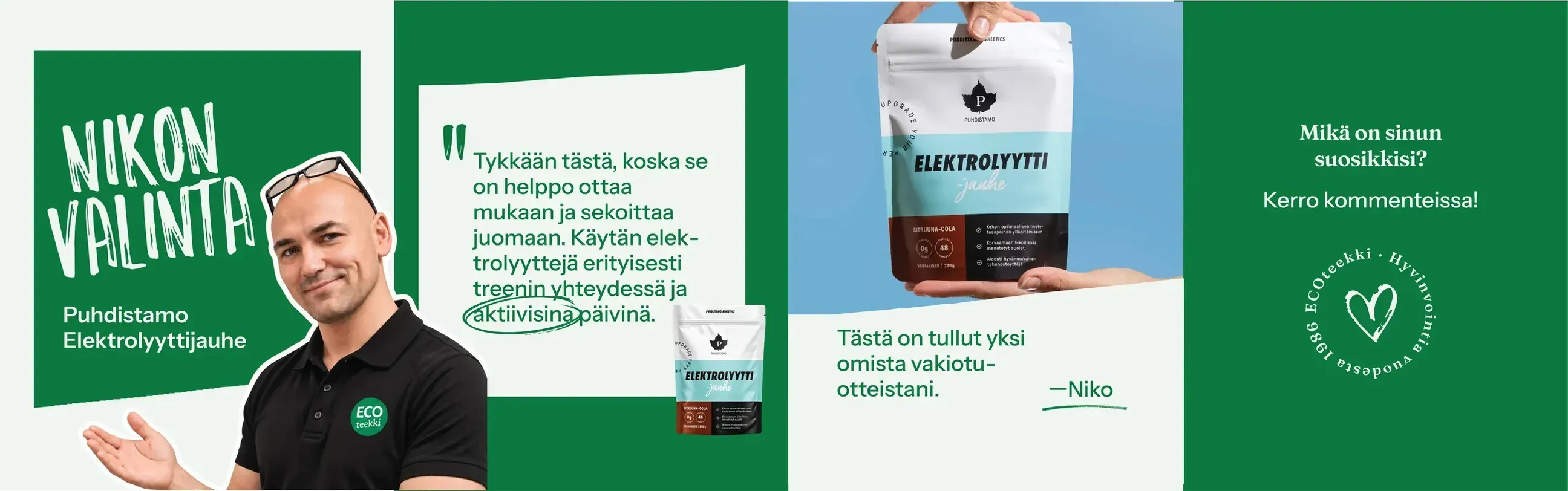
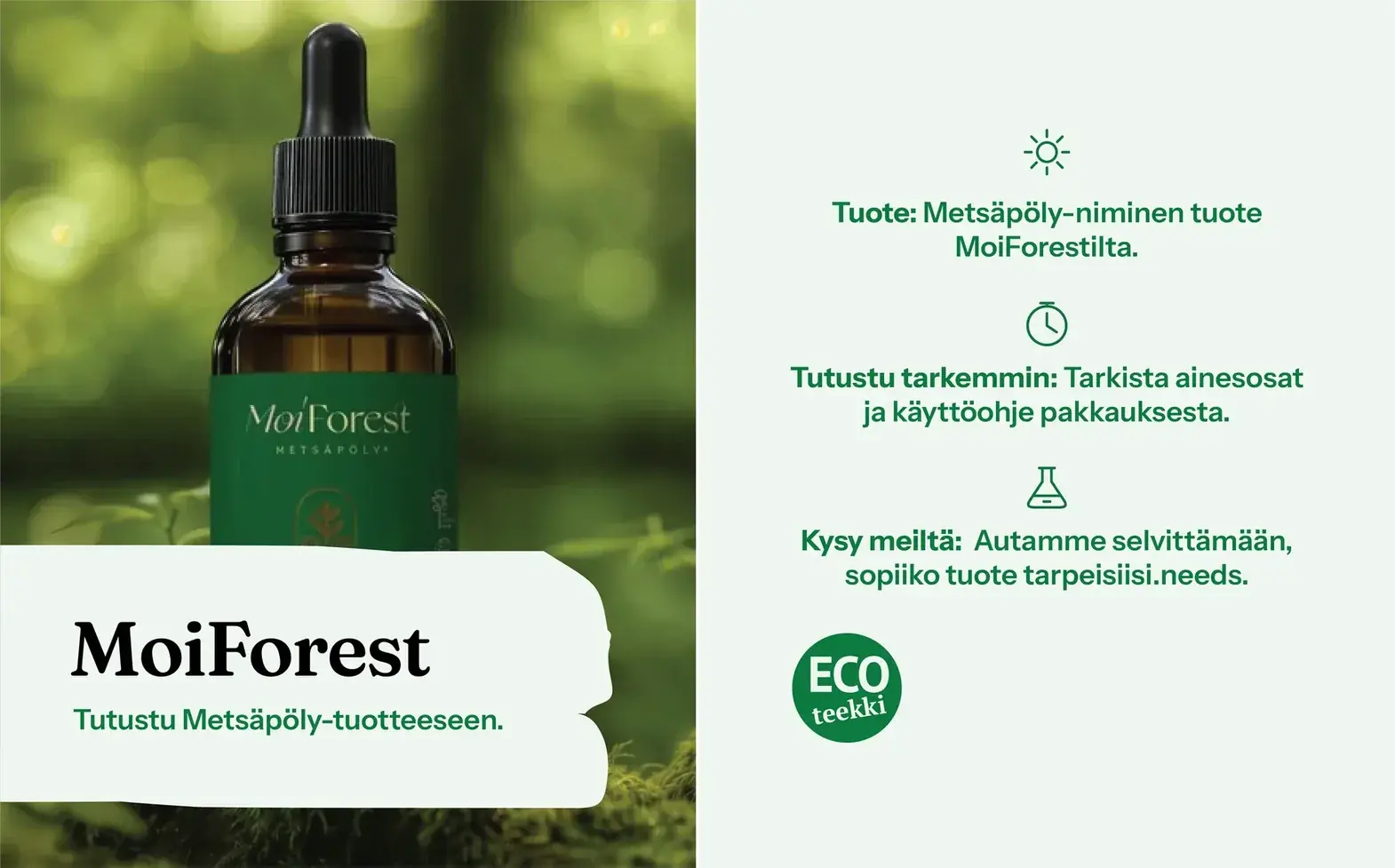
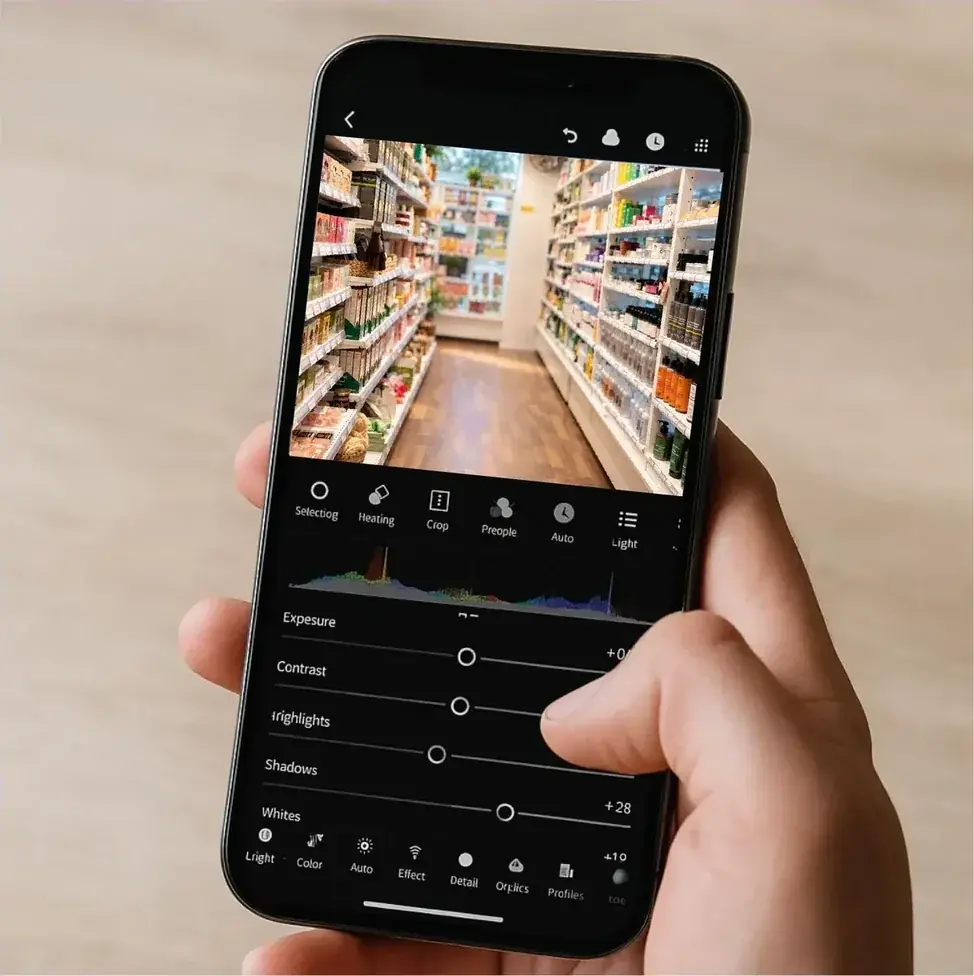
A foundation built. Adoption still in progress.
A shared foundation
The toolkit gives ECOteekki a common reference for what to say and how to present it, so each new post builds on an established direction. I continue to refine the system through new content examples.
Too early to assess the impact
The client is still learning to juggle new tools, review AI outputs and assemble posts. Independent use, time savings and marketing results have yet to be established.
Make getting started easier
I would make onboarding more structured: create the first post together using one template, then observe the client creating the next independently.
Potential beyond ECOteekki
The approach could become a repeatable service for small businesses, helping them create consistent content without a dedicated designer. That potential still needs testing through ECOteekki’s ongoing use of the toolkit.